

JavaScript is a sophisticated programming language for developing interactive and dynamic online applications. As a result, it is an excellent choice for college students seeking to develop unique and captivating projects that showcase their abilities and creativity. The following are the top five JavaScript project ideas for college students:
- Interactive Web Game
- Marketplace
- Social Networking Site
- Weather App Site
- E-commerce Website
Interactive Web Game:

An interactive web game is one that is intended to be played on a website or web application that makes use of web technologies such as HTML, CSS, and JavaScript. The game is designed with interactive components and animations to provide the user with a pleasant and engaging experience.
Puzzles, quizzes, action games, adventure games, and more sorts of interactive web games are available. These games are typically designed to be simple to play and understand, allowing people to pick up and play without any instructions. Leaderboards, achievements, and incentives are all typical components of interactive web games. These aspects are intended to encourage players to keep playing the game and compete for the highest score. JavaScript is a popular programming language for making interactive web games because it offers a great deal of versatility and power when it comes to creating interactive and dynamic user experiences. JavaScript frameworks such as Phaser, Pixi.js, and Three.js can be used by developers to create complicated games with advanced graphics and animations.
Ultimately, interactive web games are a fun and innovative way for developers to demonstrate their abilities while also providing users with interesting web experiences.
Online-Marketplace:

A JavaScript-based online marketplace is a website where buyers and sellers may meet, negotiate prices, and conduct business. The HTML, CSS, and JavaScript behind the marketplace's development make for a dynamic and responsive interface.
The search and filtering functions, shopping cart, and payment procedure are just a few examples of the dynamic and interactive aspects built into the marketplace with the help of JavaScript. Popular JavaScript frameworks such as React, Angular, and Vue.js might be used to construct the marketplace, as they supply developers with a variety of pre-made components and modules. With a seller dashboard, vendors can offer their wares for sale on the marketplace and update their stock, pricing, and shipping details. Customers can peruse the inventory, look for specific items, add desired things to their shopping cart, and then pay for their purchases through a protected payment gateway. Product ratings and reviews, product suggestions, user profiles, and past purchases are just some of the JavaScript-based features found in online marketplaces. These additions are intended to improve the overall shopping experience and strengthen relationships between customers and vendors. JavaScript e-commerce sites can cater to a specific market or industry, selling just handmade goods, vintage clothing, or digital downloads, for example. Many other models, including sales commissions, subscription fees, and advertising, can be used to monetize the platform.
As a whole, a JavaScript-powered online marketplace is an effective method of facilitating commerce between buyers and sellers, increasing revenue, and fostering a dynamic online neighborhood. It has the potential to generate income for the platform while also providing a convenient and pleasurable purchasing experience for its consumers.
Social Networking Site

A JavaScript-based social networking site is a virtual meeting place where individuals may interact, exchange ideas, and build relationships with one another. HTML, CSS, and JavaScript are just a few of the web technologies that were used to build the site's dynamic and engaging features. In order to generate the site's dynamic and interactive features, such as user profiles, news feeds, chat, and alerts, JavaScript is required. Popular JavaScript frameworks like React, Angular, and Vue.js might be utilized to construct the site, as they supply developers with a variety of pre-assembled components and modules. The social networking site allows users to build profiles where they may share information about themselves such as their name, photo, bio, and hobbies with other users. People may make new contacts, keep tabs on the activity of people they already know, and participate in interest-based communities. Common features of JavaScript-powered social networking sites include "news feeds" where users can view updates from friends and other users they follow, "messaging" where users can communicate with each other in real time, and "notifications" where users are alerted to new messages, friend requests, or other relevant events. Moreover, you may be able to share photos and videos, create and participate in events and calendars, conduct polls and surveys, and connect with other social networking sites like Facebook and Twitter. JavaScript allows for the creation of social networking sites that may cater to certain user demographics and interests, such as the business community or the dating scene. Several revenue models, including advertising, membership fees, and paid premium features, are available to monetise the site.
Ultimately, a JavaScript-powered social networking site is a potent instrument for bringing people together and fostering communities based on shared interests and activities. It has the potential to generate cash for the platform while also providing users with a smooth and engaging social experience, provided that the appropriate features and functionality are implemented.
Weather App Site
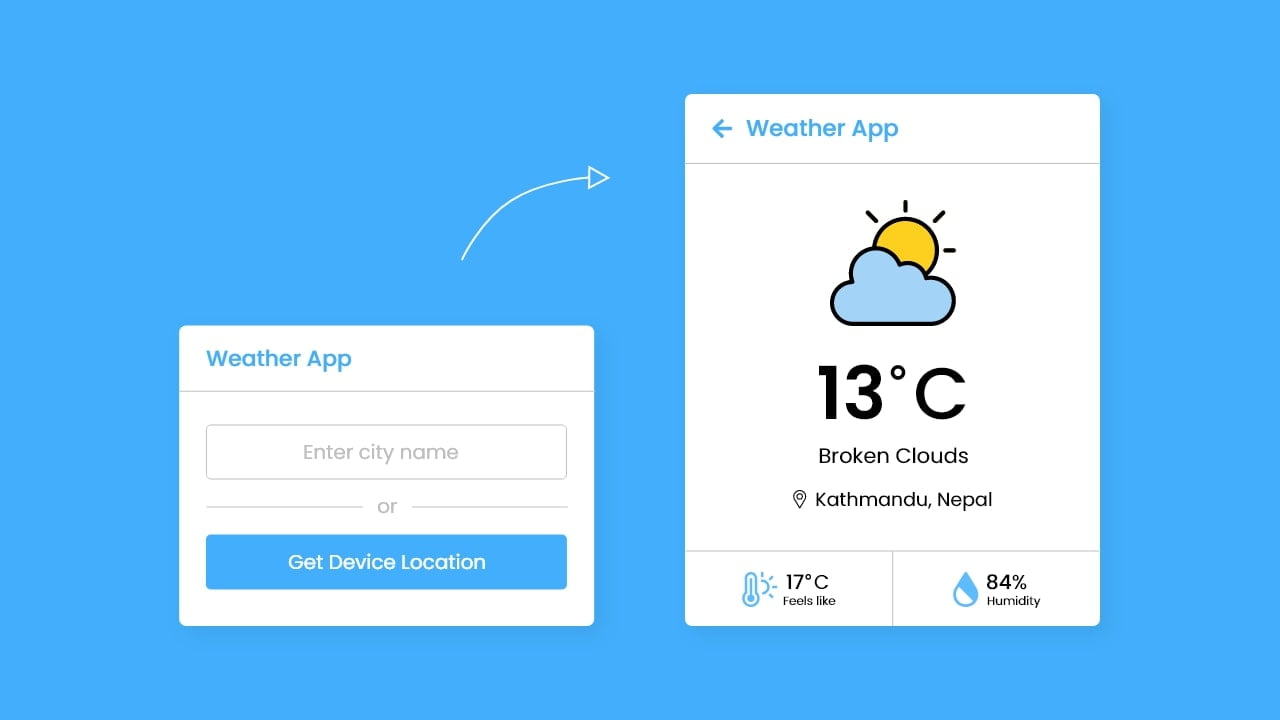
JavaScript-powered weather app websites are web-based hubs that update users on the latest weather conditions. HTML, CSS, and JavaScript are just a few of the web technologies that went into building this site so that it may provide its users with a rich and dynamic experience. APIs (Application Programming Interfaces) are queried for weather information, and JavaScript is utilized to format and present that information in a user-friendly manner. Site construction may be speeded up by employing popular JavaScript frameworks like React, Angular, or Vue.js. These frameworks supply developers with ready-made components and libraries. The software allows the user to manually enter their location or automatically obtain weather data based on the device's location. The app can show you the current weather, including the temperature, humidity, wind speed, and precipitation. In addition to providing a prediction for the next seven days, this system can also show you where the rain or snow is located through radar or satellite imagery and sound alarms if dangerous weather is approaching. A JavaScript-based weather app site often allows users to remember several locations, choose between Celsius and Fahrenheit, and view weather data for multiple time periods during the day. Appearance settings, like changing the app's color scheme or using a personalized background image, might also be included. JavaScript-powered websites offering weather apps can be tailored to serve a specific market or industry, such as the aviation or maritime sectors. Advertising, membership fees, and paid add-ons are just some of the ways that the platform might generate income for its developers.
In conclusion, a weather app site built using JavaScript is an effective method of supplying customers with reliable and up-to-date weather forecasts. If designed properly, it has the potential to generate cash for the platform while also providing users with a smooth and satisfying experience.
E-commerce Website

JavaScript-powered online stores provide a convenient and secure method for companies to trade goods and services over the Internet. Site features HTML, CSS, and JavaScript among other web technologies for a dynamic and user-friendly interface.
JavaScript is used to build the e-commerce site's dynamic and interactive features, such as the search and filtering of products, the shopping cart, and the checkout procedure. JavaScript frameworks like React, Angular, and Vue.js may be used to rapidly assemble the site's essential elements and libraries.
Customers may shop the store, find what they need with a search bar, put things in their virtual shopping cart, and then pay for them with a trusted payment processor. Product data such as photos, descriptions, specs, and customer reviews can be shown on the website. Based on previous searches and purchases, the site can also recommend or display relevant products to the user. Product reviews and ratings, product suggestions, user profiles, and order histories are all features commonly seen on JavaScript-powered e-commerce websites. Options to change the site's look and feel, such as colors, themes, and wallpapers, might also be available. JavaScript-based online marketplaces can be tailored to sell only certain products, such as those in the clothing, electronics, or grocery categories. A variety of business models, including commission on sales, membership fees, and advertising, can be used to monetize the platform.
Using JavaScript to run an online store is a great strategy for any company looking to expand their reach into the global marketplace. It has the potential to generate income for the platform while also providing a convenient and pleasurable purchasing experience for customers, given the correct set of features and capabilities.
To sum up, JavaScript is a robust programming language that can be used to build a wide range of exciting and useful online apps. As students at today's universities, we have an abundance of time and resources at our disposal to develop original and innovative projects that demonstrate our talents and abilities. The five most popular concepts for college projects in JavaScript that were recently discussed—an interactive online game, marketplace, social networking site, weather app site, and e-commerce website—are simply the tip of the iceberg. College students may benefit greatly from investigating these project ideas and putting them into reality, as they will provide them hands-on experience in web development and a portfolio of spectacular projects that will set them apart from their peers.